

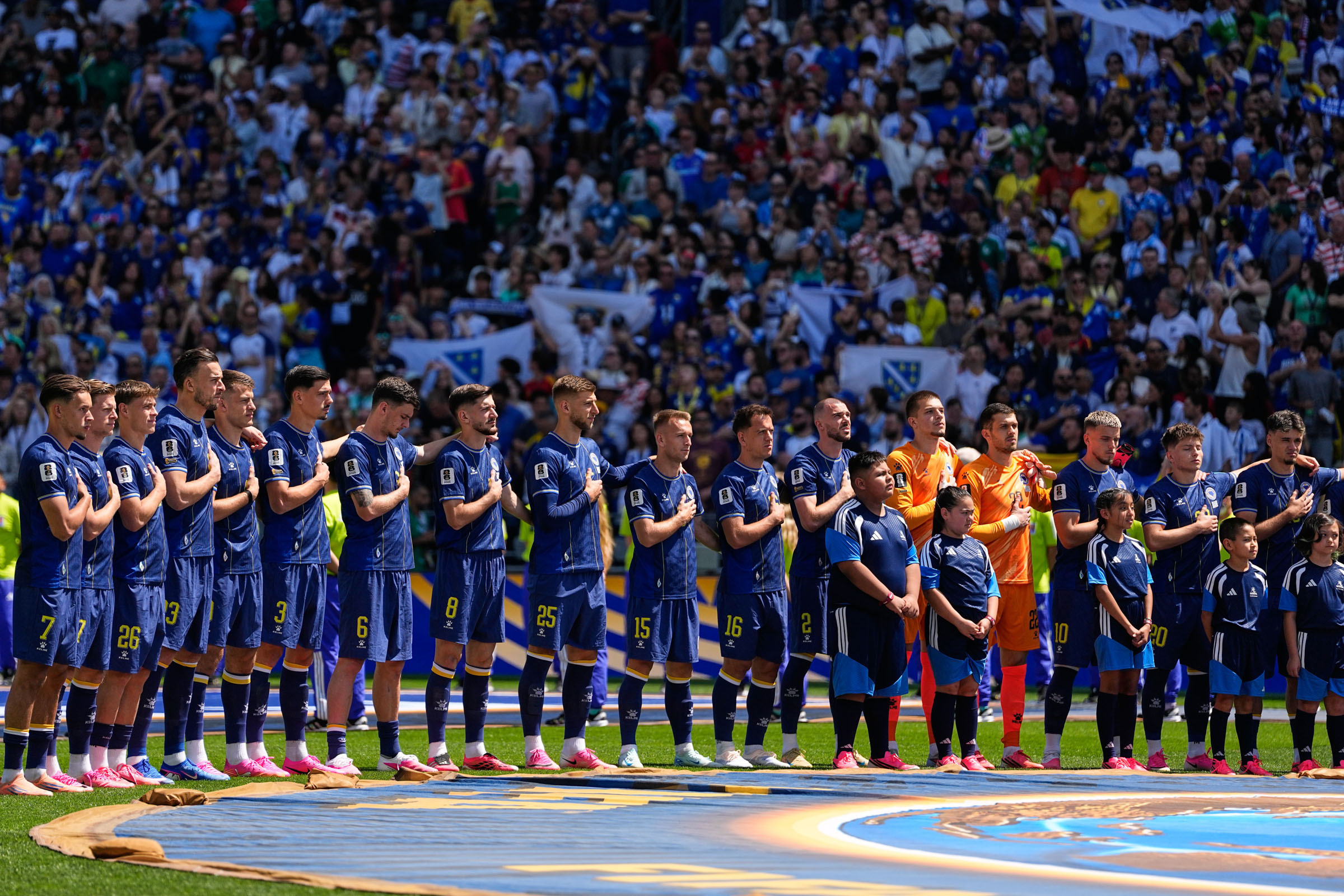
For all intents and purposes, this is a team that should not exist. In 1995, more than 8,000 Bosnian men and boys were killed during the Srebrenica genocide. Several of the players who will take the field for Bosnia this week are the children of survivors of that genocide. Others are children of families who were displaced by ethnic cleansing. Players like Esmir Bajraktarević belong to a generation born abroad because their parents escaped unimaginable violence and rebuilt their lives in places they had never expected to call home. Born in Wisconsin to parents from Srebrenica, Bajraktarević has spoken about carrying Bosnia’s painful history “in his blood.”

It’s also reflected in the culture surrounding the team. The lyrics of Dubioza Kolektiv’s unofficial World Cup anthem “I Am from Bosnia – Take Me to America,” are catchy and humorous, but also bear the ring of truth. The song’s refrain, “Take me to the Golden Gate; I will assimilate,” captures the paradox of Bosnia’s modern identity. The diaspora created by war has, ironically, become one of Bosnia and Herzegovina’s greatest national strengths. Young men raised in the United States, Sweden, Austria, Germany, the Netherlands, and elsewhere have chosen to represent a country they first knew through family stories of pain and loss. Their commitment is a reminder that national identity is about more than birthplace. It is about belonging.