

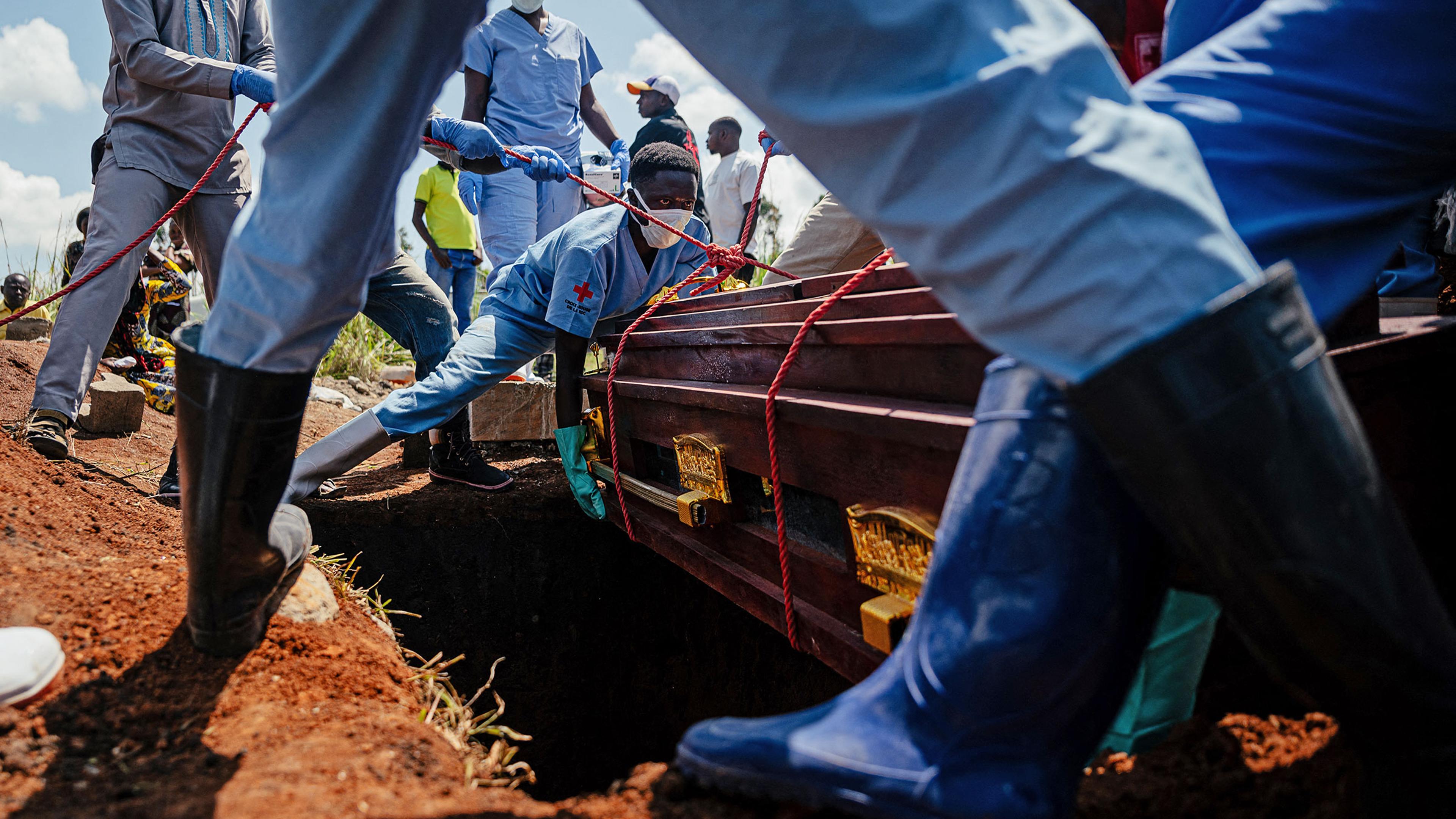
“At both the macro and micro level, we are seeing changes that we haven’t seen in 25 years,” says Vincent Lin, associate director of health policy and advocacy at the global nonprofit Partners in Health. “It’s a total reset of the system, and not something Congress agreed to or approved.”

The U.S. is contributing to the Ebola response, but not in the ways that would have once been expected. In briefings, the CDC’s incident manager for the Ebola response, Dr. Satish Pillai, said the CDC now has more than 400 personnel involved in the Ebola response, both in the U.S. and overseas, and has sent supplies like personal protective and lab testing equipment. The U.S. has also provided $270 million directly to combatting the outbreak, according to the State Department, including an additional $350 million for the outbreak and other humanitarian needs in Congo, Uganda, and South Sudan, and $50 million more to develop new treatments and vaccines. By comparison, in the 2014 outbreak, the U.S. provided nearly $2 billion in financial support, drawn from a package of $5.4 billion in emergency global health funding appropriated by Congress.