

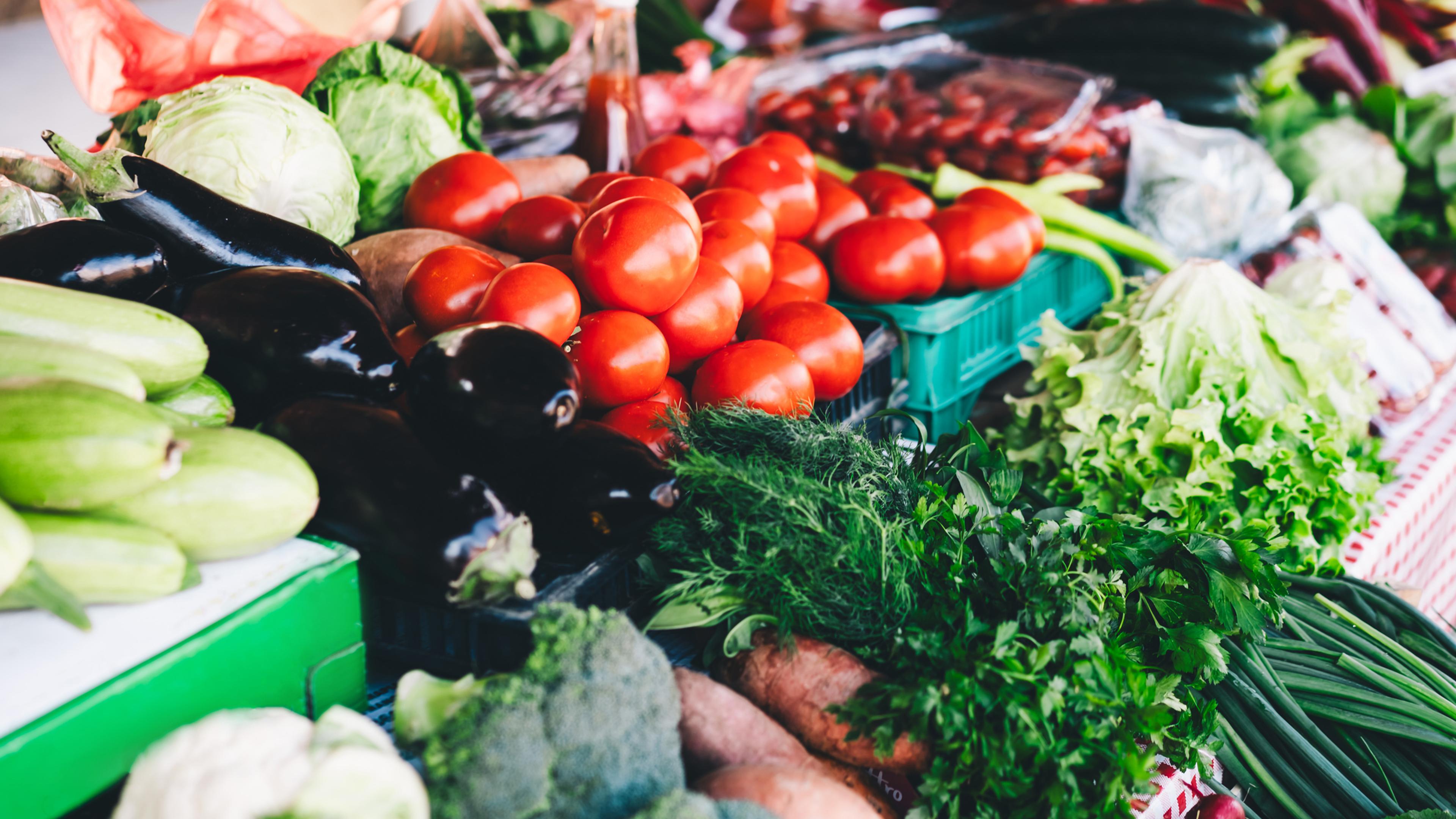
As Cyclospora cases continue to mount across the U.S., shoppers from Kentucky to Michigan are flocking to local farmers’ markets in search of safer produce. But are farmers’ markets actually less risky than grocery stores when it comes to avoiding cyclosporiasis and other foodborne illnesses?
Some food-safety experts say farmers’ markets could be a safer bet, though that depends on where the produce actually comes from and the practices of the individual farmer. “If you are getting produce directly from the farmer who grew it, I would consider that lower risk,” says Kalmia Kniel, a professor of microbial food safety at the University of Delaware.
Other experts say produce from supermarkets isn’t inherently more dangerous, and that consumers can take steps—both at the grocery store and the farmers’ market—to protect themselves from foodborne bugs.
Darin Detwiler, an associate teaching professor of food policy at Northeastern University and author of Food Safety: Past, Present, and Predictions, says he personally favors farmers’ markets because locally grown produce typically travels a shorter distance, passes through fewer processing and distribution steps, and can offer more transparency about where and how it was grown.
But he says consumers shouldn’t assume that all produce sold at a farmers’ market is local. He says he always asks vendors which farm the produce comes from, how far away it was grown, and when it was harvested. Detwiler says he prefers if the produce is grown within about 30 miles and sold within two days of harvest.

Rodney E. Rohde, chair of the Medical Laboratory Science Program at Texas State University, says it makes sense that people perceive produce sold at farmers’ markets as being safer—but he says there is little scientific evidence to back that up. “The risk of contamination really depends on how it was grown, harvested, transported and stored, rather than where it is sold,” he says.
In the case of Cyclospora, contamination can occur when human sewage gets into water used to irrigate fresh produce, says Barbara Kowalcyk, director of the Institute of Food Safety and Nutrition Security at George Washington University. That’s one reason locally grown produce isn’t automatically safer: A farm’s water and growing practices still matter most.
A smaller farm is also not necessarily better, says Don Schaffner, a food-science expert at Rutgers University. “Small farmers often do not have the resources that large operations” do, he says.
Food-safety experts stress that people should continue to buy and consume produce—whether at the grocery store or the farmers’ market—despite Cyclospora fears. “Don’t quit eating fruits and vegetables,” Rohde says. But people can take precautions to limit their risk of Cyclospora and other foodborne pathogens.
Bill Marler, a food-safety lawyer, recommends buying intact heads of lettuce and whole fruits and vegetables over bagged, boxed, or pre-cut produce. Centralized chopping, washing, mixing, and packaging can spread contamination from a relatively small amount of produce across a much larger batch, he says.
Experts also advise washing produce thoroughly under running water, scrubbing hard fruits and vegetables such as melons and cucumbers, and following other food-safety practices, such as keeping raw meat and vegetables separate when cooking.
Cooking food to an internal temperature of at least 158°F can kill Cyclospora. Rohde says he has been cooking most of his veggies lately and has been washing produce “more vigorously than usual.”